From the Room Issue
Ellen Hodakova on care as a way of working, intuition as structure, and why clothes begin with the room, not the self.
Stockholm, mid-winter. Forty centimeters of snow, the kind that quiets the world and forces time to slow down. When I speak to Ellen Hodakova, I am in Paris, where winter is more a romantic idea than a real season. She is in Sweden, where nature can still dictate the rules. The contrast feels fitting. Hodakova’s work exists precisely in this in-between. Between city and forest, function and sculpture. Talking to Hodakova does not feel like an interview, more like entering a space shaped by attention and depth.
When I ask her about home, she doesn’t romanticize it. “Home is related to safetiness” she says. “Comfort. To create your own spectrum, a world that feels deeply your own.” Then she adds: “If you’re putting yourself in other spheres that are not so safe, if you’re taking risks, you need to keep that sense of safety at home to stay balanced.” Growing up close to raw nature, animals, water, forests that don’t exist to be aesthetic, taught her that safety and danger aren’t opposites. “Nature has always felt very safe,” she says. “Even though there’s a moose going by.” You learn to live with the ecosystem, not against it. “If you let yourself be there, you kind of need to follow it. Then you’re only acting on intuition.”

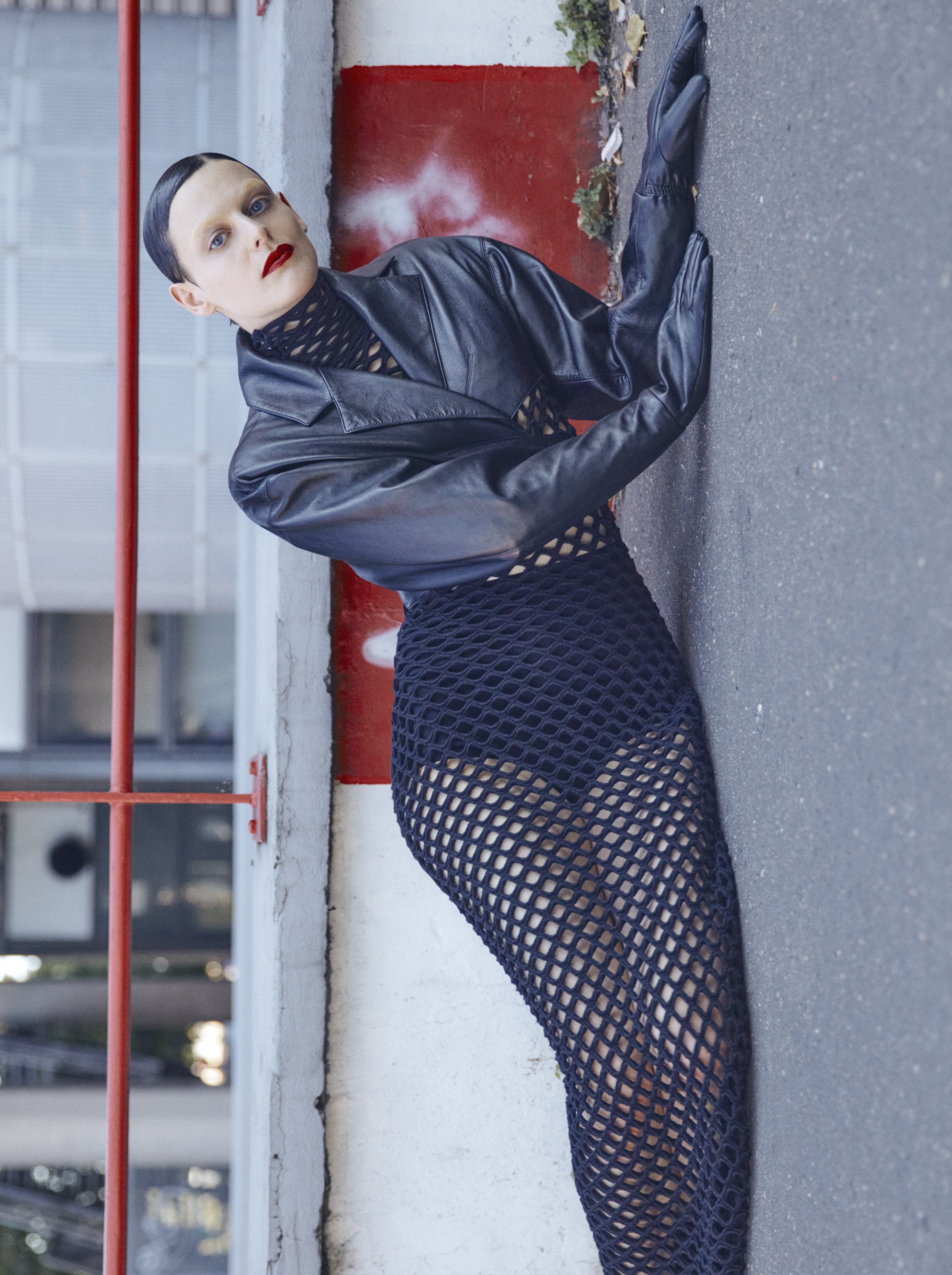
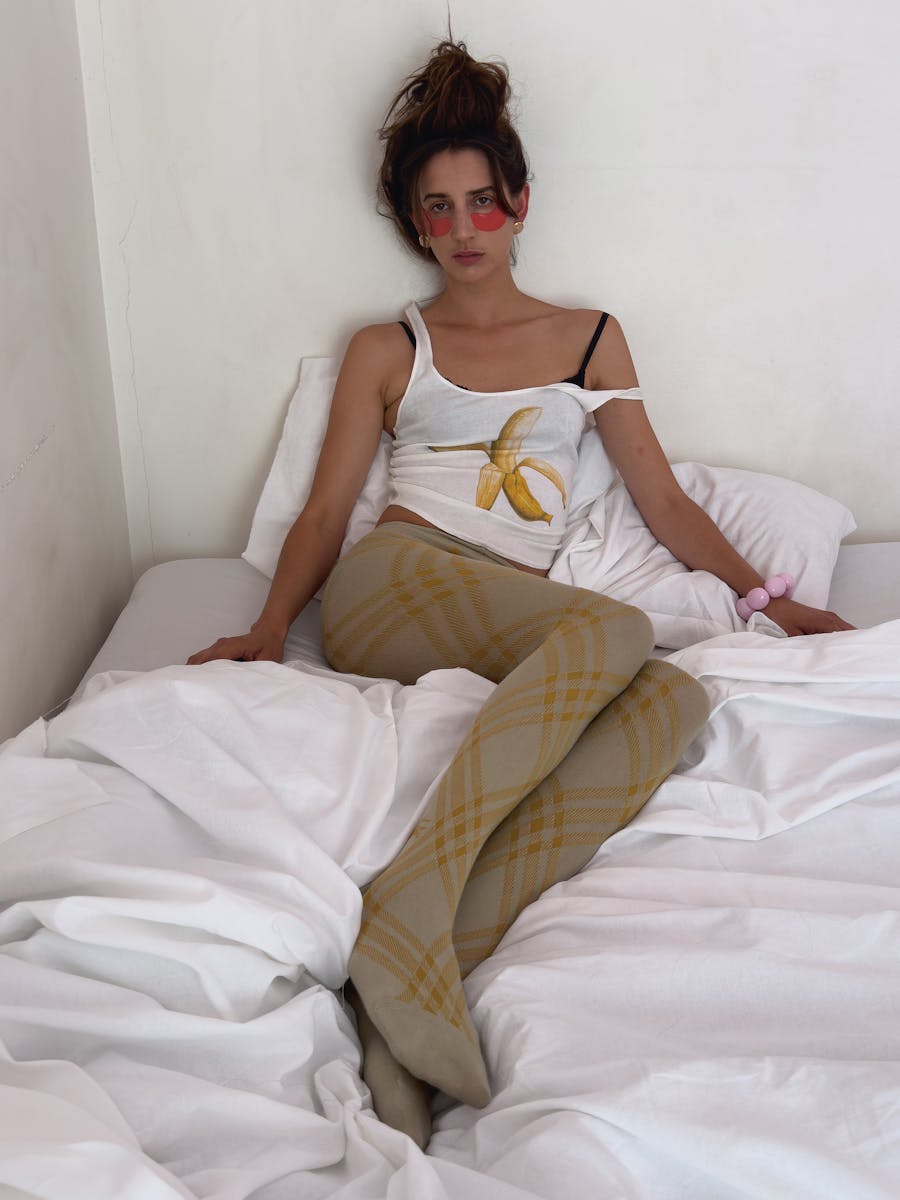
All clothing and shoes HODAKOVA
MAISON MARGIELA SS2022 socks from PYRN ARCHIVES

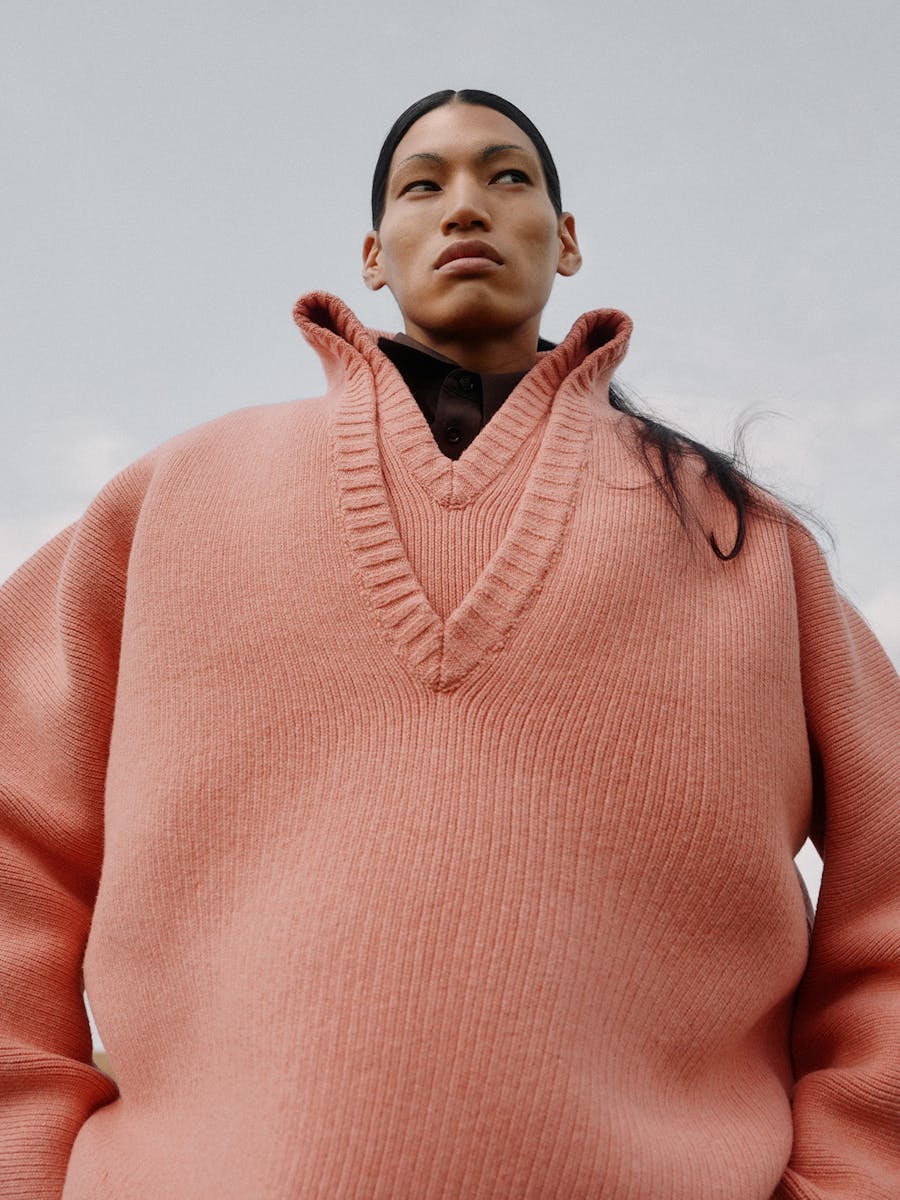
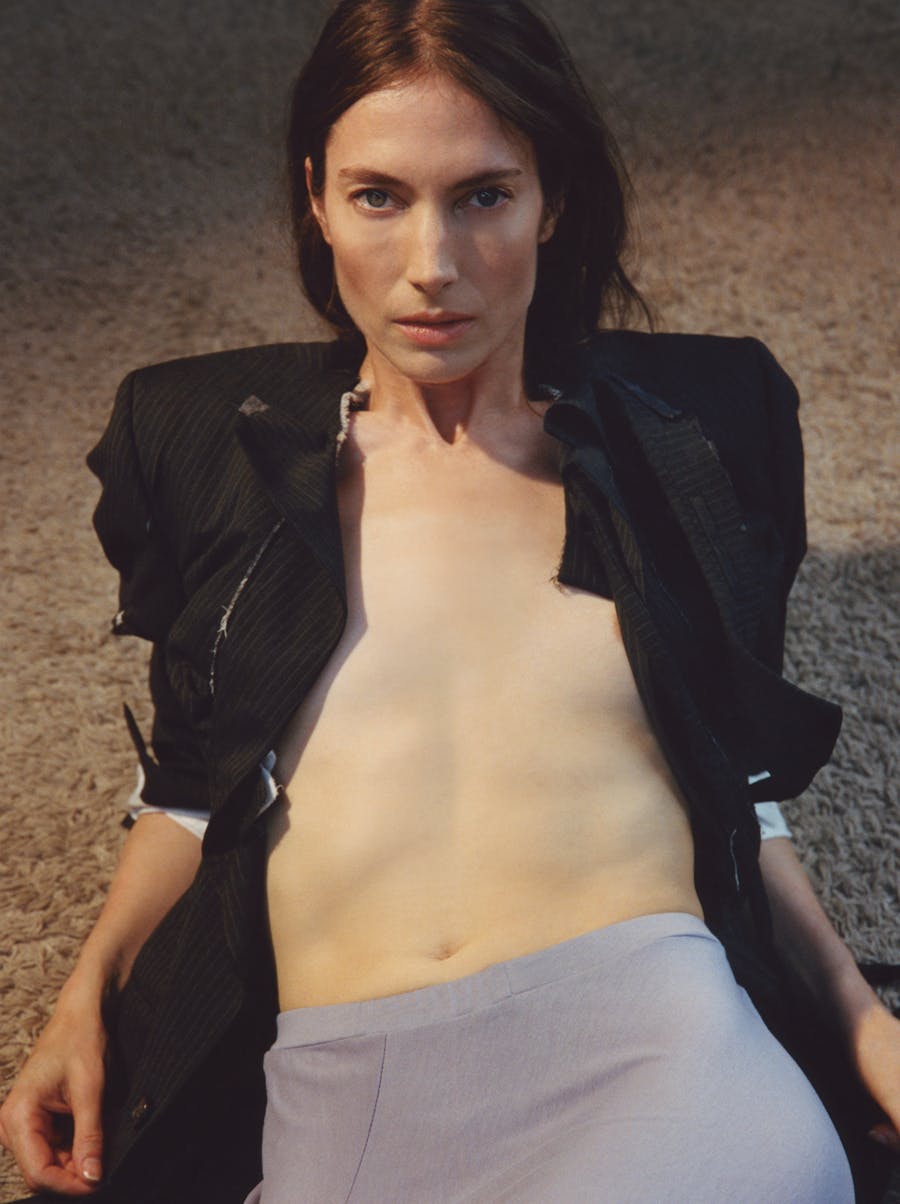
All clothing and shoes HODAKOVA
That intuition is central to how she works. When I ask how she knows when an object belongs in a collection, she shrugs slightly. “You kind of just know,” she says. “If you trust your intuition.” It’s not about repurposing for the sake of it. “It’s more like being born again,” she explains. An object shedding its previous function and re-entering the world with a new logic.
She talks about umbrellas. Mass-produced symbols of protection. “The amount of umbrellas companies are pushing is crazy,” she says. So she stripped them down, removed the fabric, kept only the bones. “The water that floods on us is also what creates life.” What she describes might sound ironic, but it touches one of the most serious issues of our time.
Sustainability comes up quickly when speaking about Hodakova. “It’s the ground rule of everything,” she says. “For me, it’s a humble way to connect everything I do to care.” Care, she insists, is the real issue. “If you don’t care about things, they get lost. And I think we have stopped caring in a broader perspective.”
Her background explains a lot. Sculpture, yes, but also uniforms. Military order. Equestrian discipline. “My dad always came home and fixed his clothes,” she says. “It’s about care. Being aware. Taking care of the only things you have to carry.”
Impression matters, not as the typical vanity, but as communication. “How you present yourself says something,” she insists. Clothing is not neutral. And yet, she’s not interested in being loud. She references the Swedish idea of lagom. “It doesn’t need to be shouty,” she says. “It doesn’t need to be marketing.”
Balance, for her, is not just a formula to live by, it has structural relevance for the way we live. The conversation shifts to one of my favourite past comments of hers, the idea of surprise. She lights up. “Whatever I create, it needs to have a surprise,” she says. Not spectacle, not shock. A mental shift. “If it’s not a surprise for me, if I’m not like, ‘Oh, this works’ then it’s not interesting.” Heavy materials need to look light. Hard things need to move. “Otherwise it’s just... a bunch of belts,” she laughs.
Then there’s the craft. The kind that borders on the unreasonable for the untrained eye. She describes a dress made entirely from zipper teeth, each one cut away and hand-embroidered. “It took forever,” she says, almost apologetically. “But that’s probably what I’m most proud of.” The labor isn’t decorative. It’s about commitment. A decision to slow down in an industry that seems allergic to time.
But despite the sculptural extremes, wearability remains non-negotiable. “I want pieces you really enjoy wearing,” she says. Comfort, pride, function. Her first produced shoe, a wooden heel, leather sole, wider fit, feels like a quiet manifesto for comfort. “Everyone said shoes are so hard,” she laughs. “I was like, let’s do it.”
When I ask how she wants people to feel in her clothes, she doesn’t talk about the classic idea of identity. “I’m not thinking about personality,” she says. “I’m thinking about the room you move in between.” Forest, city, occasion. She puts the wearer in context, personality is great, but personality depends on the environment, that energy is what she cares about. In times of massive fashion commentary, I feel the urge to ask her about potential misinterpretation. Unsurprisingly, it doesn’t bother her.
“I don’t care that much,” she admits. “People have different ways of seeing it.” If anything, she treats it as feedback. “How can I be clearer ? How can I develop ?” Development, she says, is everything.
When the conversation turns to the future, I’m not expecting a ten-year plan. Hodakova doesn’t offer one. Instead, she describes a place. “A destination,” she says. Workshops. Nature. Food. Making. “Something where I can express it in every single area.” Clothes are only one layer of a larger ecosystem.
Again the Hodakova ecosystem includes clothes, but the foundation remains the environment around the clothes, building a language between the wearer and the world.
Between Paris and Sweden, between protection and exposure, her identity as a designer remains clear. Defined not by noise or personality, but by context. And that’s the real continuity of her work. Staying responsive to place, and letting everything else grow from there.


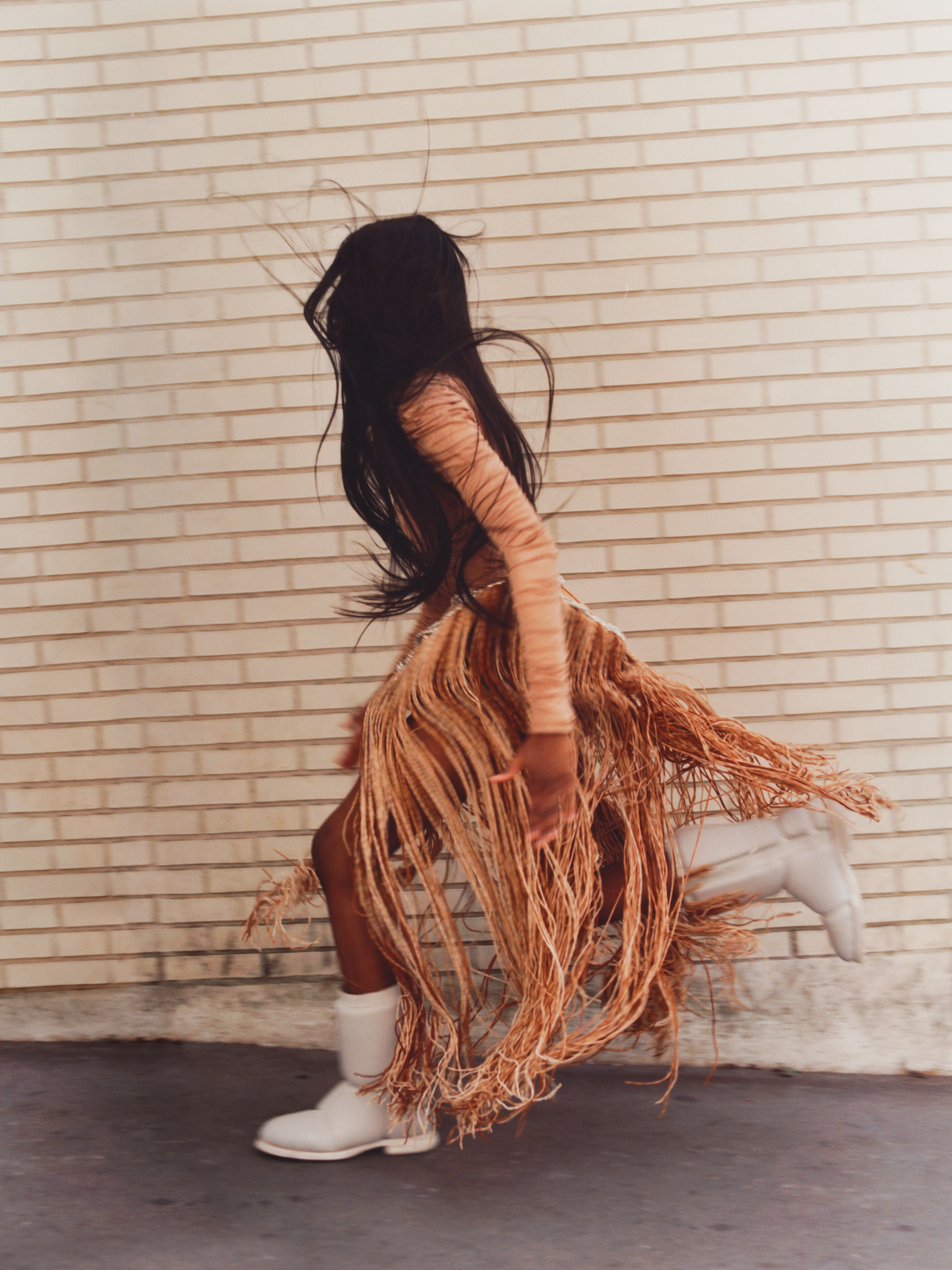
All clothing and shoes HODAKOVA

All clothing and shoes HODAKOVA
BALENCIAGA hat from PYRN ARCHIVES

All clothing and shoes HODAKOVA

All clothing and shoes HODAKOVA

All clothing and shoes HODAKOVA

All clothing and shoes HODAKOVA