From the Room Issue
A conversation with Benjamin Belaga, founder of Yoyaku, a Parisian temple of vinyl that has elevated listening to the status of an art form.
14 boulevard de la Chapelle, just a short walk from Stalingrad. To meet Benjamin Belaga and grasp the ambition behind Yoyaku, the project he founded ten years ago, you first have to push open a heavy carriage gate and cross a long, enclosed courtyard. Beyond it lies a former workshop flooded with light from vast glass roofs. On one side, state-of-the-art equipment and crates overflowing with vinyl records ; on the other, a striking gallery space showcasing promising figures from the creative scene. Two faces of a much broader project: an entire ecosystem where music and contemporary art are in constant dialogue.
How did the Yoyaku adventure begin ?
BENJAMIN BELAGA I studied architecture in Strasbourg, but music was always a passion. Ten years ago, I started a label that did fairly well. As some artists gained recognition, we built up a solid address book and a network of independent record stores. Eventually, we opened our own small shop—barely 30 square metres—in Belleville. Then, four years ago, we found this space between La Chapelle and Stalingrad, a former art gallery, Fabienne Leclerc’s In Situ, and everything accelerated. We gradually became interested in every stage of music production, bringing together more and more people who shared our vision and ambition. Today, we’re a fully-fledged company with around fifteen employees working across the different branches of our activity.
What does the name Yoyaku mean?
B.B. At the beginning, our approach was very minimalist. Yoyaku is a Japanese word that means both “booking” and “reservation,” which perfectly matched what we were doing: we were a record store where you had to book an appointment to buy a record, and at the same time a booking agency for artists. Today, it mainly symbolises the special relationship we’ve built with Japan. Through our name and our reputation as purists, we’re very well regarded there.
What are the different areas of activity within Yoyaku ?
B.B. We built Yoyaku with the idea of being involved at every stage of music production. First, there’s the manufacturing of the vinyl object itself—we coordinate all the players involved, from factories to studios. In 2026, we’ll be taking this even further, as we’ve just acquired a factory in Germany where we’ll be able to press our own records. We also work extensively on the visual side. Atelier 14 brings together creatives to innovate and explore new formats for record sleeves, particularly in 3D, VR, and other technologies. We recently collaborated with Laurent Garnier. Distribution is another key part of what we do: once a record is ready, we distribute it through a network of specialised record stores on a B2B level, but we’re also active in B2C, as Yoyaku is first and foremost a record store that anyone can visit, seven days a week.
With the ambition, ultimately, of becoming a major cultural venue in Paris ?
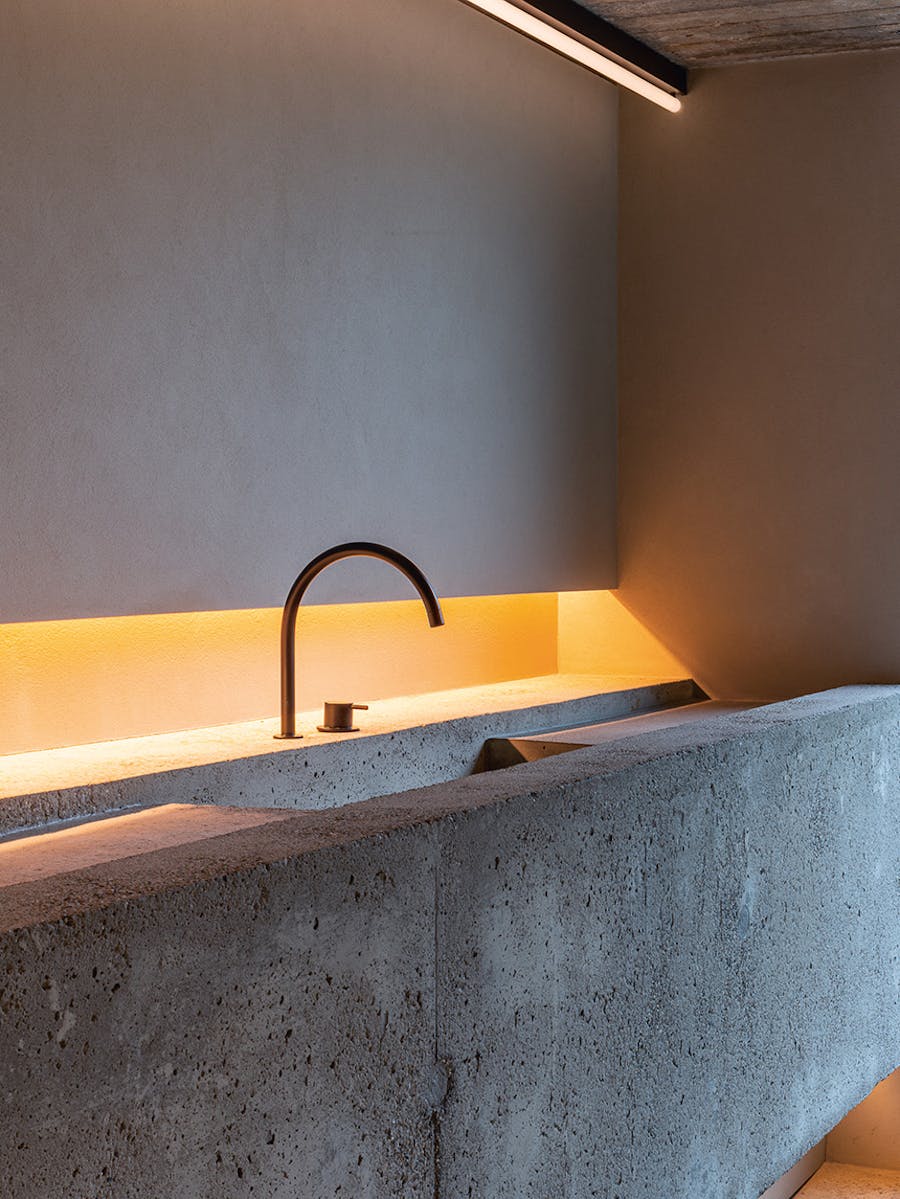
B.B. We’ve created an ecosystem made up of several elements that are autonomous yet interconnected. There’s the large record store space, where people can listen to and buy a curated selection of vinyls—from our own label and beyond. It’s also a place where we host artists for intimate “Instore Sessions,” which are later broadcasted on YouTube. We’ve welcomed artists like Nina Kraviz and Tomoki Tamura. In the basement, there’s what we call the “White Cube,” a space designed with extreme precision. I could talk for hours about the technical details, but it features cutting-edge soundproofing and top-level equipment for an exceptional listening experience, along with video projectors to develop visual and digital arts in connection with music. Finally, there’s Chapelle XIV, a space imagined by my wife, Éléonore Levai: a contemporary art gallery with a curatorial programme closely linked to the venue, focusing on emerging artists.
Even before vinyl made its return to the mainstream, you placed your bet on the format. How do you interpret this new golden age ?
B.B. It wasn’t really a bet. Even if our approach might have seemed somewhat niche at first, we quickly noticed that this was where our audience was naturally heading, that vinyl retained this unique aura. And it was through this object that we were able to develop our company. In the end, it was the public that drove the direction of Yoyaku. Today, we see that movement resonating more broadly across society. We rode the wave, but we also helped fuel it.