From The Stories Issue
Most designers can trace their first memory of fashion back to a garment or a brand. Only a few trace it back to the energy surrounding the clothes themselves, some so strong they had already begun sensing it as children.
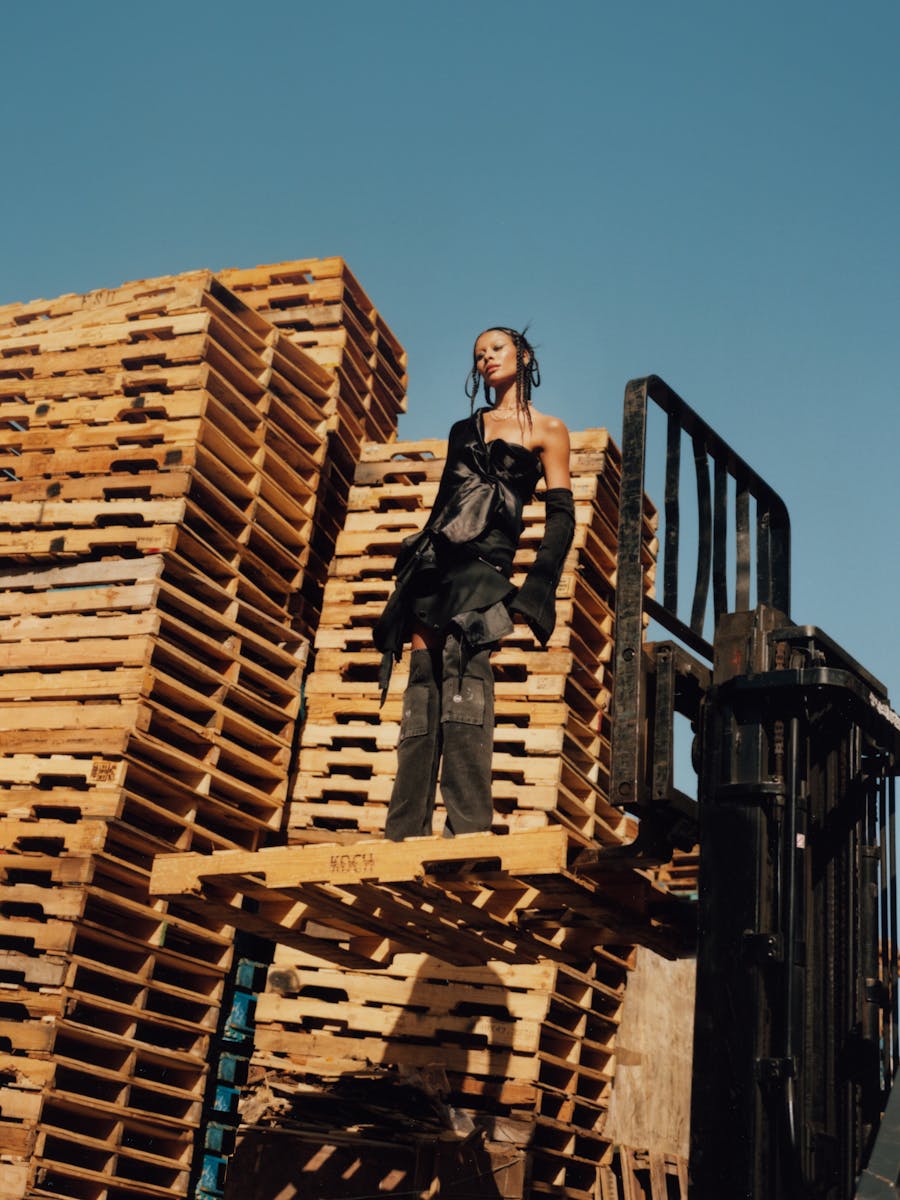
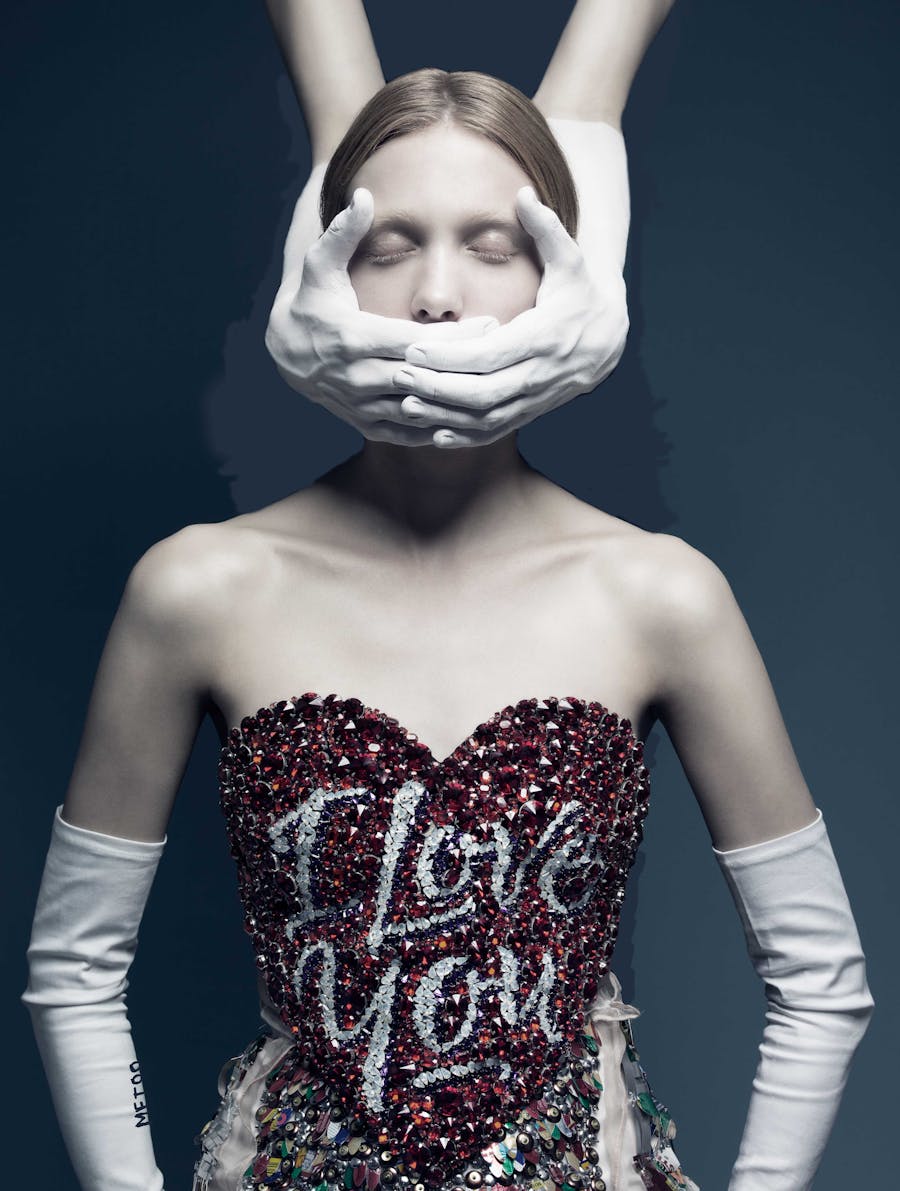
Torisheju—or Toju, as almost everyone calls her—doesn’t think in individual garments when she designs. She thinks in situations. A Rubik’s Cube, as she describes it, where every turn reveals an unexpected new perspective. That millisecond of unconscious moment between perception and revelation is exactly where she wants to surprise the future wearer.
Her earliest memory of clothing—please forgive the predictable chronological interview question, but a little context is always helpful—takes us to the Roman Catholic Church.
“I’ve never really seen clothes as just clothes,” she explains. “To me, it has always been about world building. It’s the clothes that live in the world.”
It is an important distinction in a time where fashion is increasingly discussed through products alone. Torishéju did not fall in love with clothes as isolated objects. She fell in love with what they could make believable. The robes she saw in church belonged to a larger ceremony, with its own characters, hierarchy and codes.
“I liked the way the gowns almost devoured the priest’s body,” she says. “I fell in love with the way fabric can be manipulated, not only in shape and form, but in the idea of making one think that something is something else.”
Torishéju was already trying to understand the psychology behind ceremonial gowns, while most of us were busy collecting stickers during that age.


This instinct would later develop through theatre. Before fashion, Torishéju studied dance, singing and drama, with acting as her first love. Today, she approaches a collection almost like a method actor approaches a role.
“I really become the collection whenever I’m working on it,” she says. “In my mind, and sometimes physically, I act out certain parts of how the collection or the show is going to come about.”
Oddly enough, we celebrate this kind of total immersion when men do it on screen, but rarely recognise it when a female designer does it through clothing.
Every look therefore arrives with its own posture, hair, makeup and attitude. She isn’t designing garments first and styling them later. She is establishing a person. “When I design, it is always a complete look,” she says. “Every character has a role to play.”
That is why the completeness of her collections never feel like a coincidence. The construction tells half the story. The other half was already imagined before the first pattern was cut.
Perhaps unsurprisingly, Torishéju becomes even more animated discussing pattern cutting than sketching.
“Pattern cutting is like solving a puzzle,” she says. “It’s like solving a riddle.”


In 2013 she moved to Berlin to immerse herself in the precision she associated with German pattern cutting. To all fashion outsiders, pattern cutting is perhaps the closest thing fashion has to engineering. Transforming two-dimensional shapes into a three-dimensional body. It is also one of the first skills many designers choose to outsource.
“It makes me really happy,” she says. “You put it together on paper, cut it out in fabric, see it come to life and think: yes, yes, yes.”
There is something refreshingly unfashionable about her enthusiasm for construction. In an industry increasingly rewarding image over craft, Torishéju remains fascinated by the knowledge hidden underneath a garment.
The same thinking explains her defence of education.
“Experience is key,” she says. “If you start a brand without having experience in the industry, in a store, through school or somewhere else, you are robbing yourself of information.”
For Torishéju, learning extends far beyond design itself. Rejecting education ultimately means rejecting information and with it, a deeper understanding of design and its creation.
A quote that should be read by any newly approaching t-shirt designers.
“You don’t stop learning when you finish school,” she says. “The reason we’re on this planet is to learn.”
The fundament of her view for the current state of fashion.
Too many clothes, she argues, are created without enough reason to exist. Production has accelerated, while the ability to make an audience dream has weakened.
“Nobody wants to tell stories anymore,” she says. “Part of your job as a designer or a creative is to make people dream. If you cannot make people think or transport their minds somewhere else, what is the point?”
Clothes remain commercial objects, but people rarely buy garments for their functionality alone.
“They buy into the world you’re building.” When I ask what she ultimately wants from the future, I expect an answer about growth, influence or legacy.
Instead, she says.
“I just want to be happy.”
For someone who spends her career constructing elaborate worlds, it is perhaps the simplest answer she gives all afternoon.
“Happiness is priceless,” she concludes. “It’s not something everybody gets in their life. So I just want to be happy.”