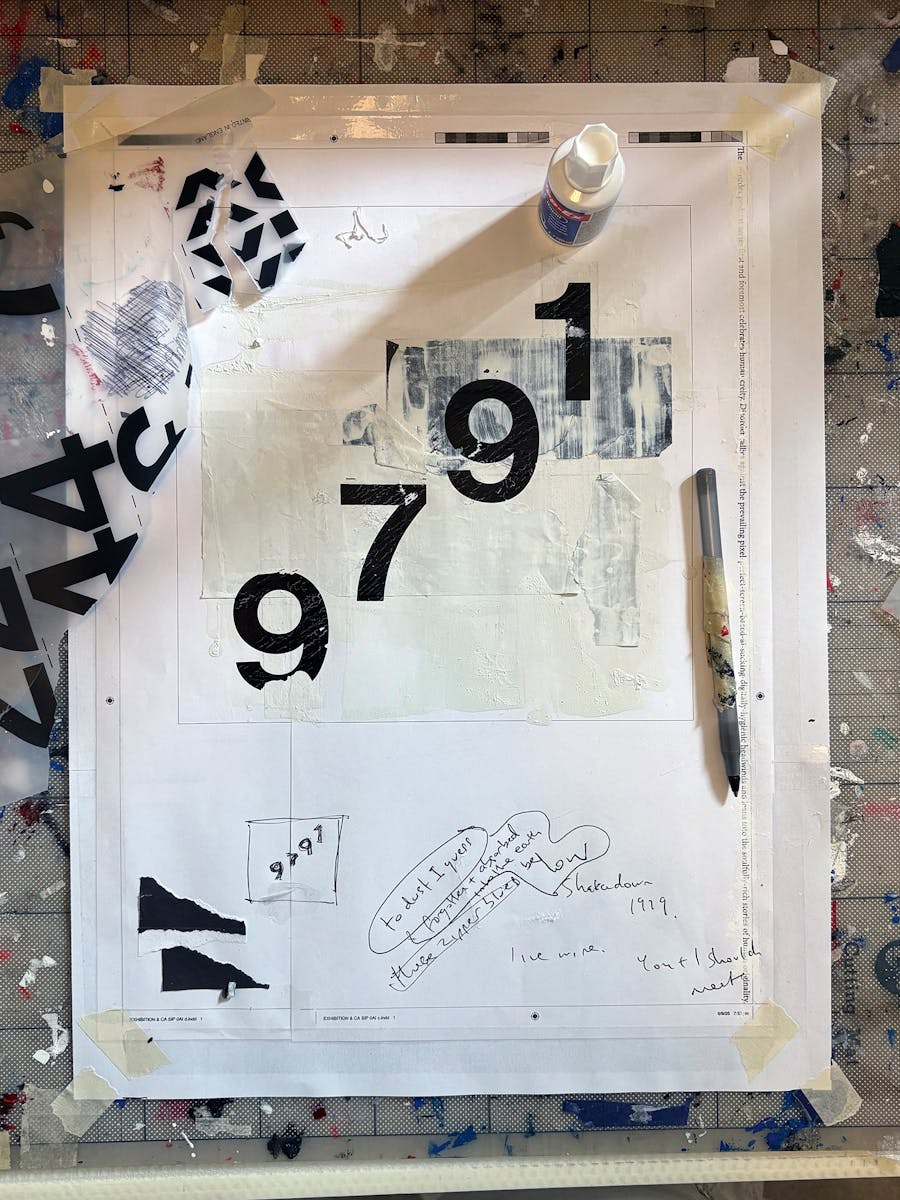
Chris Ashworth comes out of a moment when graphic design collided with music, print, noise, and attitude. A world where making images was as much about instinct, accident, and hands-on process as it was about systems.
For this Book Club, we step inside the books that shaped that trajectory, the references behind his visual language and the way he builds meaning through making.
In three words, describe your library.
C. A. It’s grown smaller.
After relocating back to the UK from the US and being forced to downsize, the select collection I now have gets repeated viewings. It’s pretty tough to make it into my collection and I enjoy that aspect. I used to collect everything and found I wasn’t looking at most of them. Now you have to earn it.
How do your books influence the way you edit, sequence, or even make images yourself?
C. A. The books I keep have made an indelible mark on me. From Ruder’s design principles and the way he lays out type, to Rick Rubin’s bite-sized 3-4 page chapters and the potent visual simplicity of Watching Words Move. These stay with me throughout my workday and will always have an influence.

WATCHING WORDS MOVE, Ivan Chermayeff ans Tom Geismar
Beyond your practice, do they also shape the way you see things: what you notice, and what you choose to frame in everyday life?
C. A. Yes. Particularly the Rick Rubin book. I’ve read it three times now and I’ve found that it helps me understand "me" more. I'm not normal and I was able to relate to what he was describing, which gave me great comfort and helped me feel more comfortable with myself.

THE CREATIVE ACT : A WAY OF BEING, Rick Rubin
Do you remember the first art book that shifted the way you look at images? Can you point to one image from it that stays vividly with you today?
C. A. That would be the Emil Ruder book highlighted in this feature. My tutor at York College showed it to me. The font Univers became a staple of mine - I did a thesis on it - it was a beautiful alternative to Helvetica, and Ruder’s principled thinking and typographic visuals struck a deep chord.

TYPOGRAPHY, Emil Ruder
How important is the materiality of a book to you: its format, its weight, its physical presence as an object?
C. A. These qualities can certainly elevate a book, but for me they’re not a deal breaker. I think The Films of John Carpenter is a testament to this. It’s a pretty standard printing and format with low-production black and white throughout the inside, but this actually gives it a rudimentary, raw charm that feels apt.

THE FILMS OF JOHN CARPENTER, Kenneth Muir
Do your books remain pristine, or do they naturally become marked, annotated, and lived with over time?
C. A. I enjoy how they evolve and take on a life of their own, and feel lived-in. The pages in the Ruder book have gone a lovely cigarette yellow and still have my handwritten pencil notes alongside his copy with various sections highlighted. The Rubin book has nearly fallen apart through a rainy holiday and now has a worn-in life of its own, which I love.
Finally, if someone only saw this selection of books, would they recognize something of you in it?
C. A. My sketchbook might give me away, but beyond that I would hope I’m not such an easy read.

SKETCHBOOK, Chris Ashworth